Fake Polls Reached Major Election Trackers. Then Researchers Checked the Data.
Thomas Hale
Updated Oct 25, 2026
A polling operation admitted fabricating results after its surveys had reached major election trackers. The admission came when researchers started checking the underlying files, exposing a gap between looking like a legitimate pollster and actually interviewing voters.
Wedgewood Polls described itself as an experiment in weak industry safeguards. FiftyPlusOne, which confronted the operation October 20, said it had vetted the firm’s claimed personnel and methodology before accepting its work.
Credentials helped the firm enter the system
FiftyPlusOne says Wedgewood supplied two names when asked who was behind it: Jack Sims and Andrew Prater. The aggregator independently confirmed previous polling-industry experience for Sims and reviewed the operation’s methodology statement.
That was a plausible starting point for a new firm. Researchers sometimes leave established polling companies, set up on their own and publish self-funded surveys to develop a reputation, FiftyPlusOne explained.
Wedgewood also collected money for crowdfunded surveys and supplied what it represented as raw respondent data. Those files appeared to offer something stronger than a press release: a way to inspect the research behind the published percentages.
The operation’s numbers subsequently appeared in major tracking projects. Their inclusion let the figures travel well beyond Wedgewood’s own audience. Former Michigan Senate candidate Mallory McMorrow told the Lynnwood Times that a Wedgewood result placing her in single digits hurt donations, devastated volunteers and increased pressure on her to leave the race.
An identifier test exposed the problem
A tip containing evidence prompted FiftyPlusOne to examine a Mississippi Senate survey that Wedgewood said it conducted through Pollfish. The raw sample looked unusually tidy, according to the investigation as reproduced and discussed by Columbia statistician Andrew Gelman.
The researchers asked whether recruitment quotas explained the composition. Wedgewood said it had not used them. Rather than stop at a suspicious-looking result, the investigators checked how the platform actually generated its records.
Authentic Pollfish respondent identifiers had recognizable formatting patterns, including some strings beginning with a hyphen. Wedgewood’s supposed respondent identifiers did not behave that way.
FiftyPlusOne checked the pattern with Pollfish and another pollster using the platform. The discrepancy was evidence about whether actual interviews had taken place - not merely a suspicious election result.
Confrontation came before the explanation
On October 20, FiftyPlusOne requested Wedgewood’s response to its findings. Instead of providing a substantive explanation, the operation posted its admission that the vast majority of its releases were fabricated.
Wedgewood maintained that one crowdfunded Nebraska survey was genuine and presented the wider project as a demonstration of how easily a fictional firm could gain influence. FiftyPlusOne rejected the implication that it had simply ignored background checks.
The sequence matters: the experiment explanation arrived after investigators presented evidence, while donors and readers had previously encountered the operation as a real polling firm.
Trackers removed the surveys
The New York Times removed 15 Wedgewood surveys and Decision Desk HQ said it deleted 17 from its lists and averages, the Lynnwood Times reported.
The American Association for Public Opinion Research condemned the fabrication. Its statement said intentionally misleading the public has no legitimate place in polling and damages trust in survey research conducted honestly.
The distinction is particularly consequential during an election. An unfamiliar name can become a familiar data point once a tracker includes it; repetition can then make the number look corroborated even when every reference leads back to the same invented survey.
The trackers’ removals addressed the visible results. The larger failure was that credentials and apparently complete files allowed invented polling to gain credibility until investigators tested the data itself.
References: FiftyPlusOne just caught a pollster faking data - and they copped to it | Real political reporters use data journalism techniques to catch fakers at “Wedgewood Polls” | FiftyPlusOne exposes fabricated poll data, Wedgwood says it was an ‘experimental project’, critics cry foul | AAPOR Condemns Continued Fabrication of Polling Data

AI-Assisted Content
The News And Beyond team was assisted by generative AI technology in creating this content.
Trending

Used GoodRx Before April 2024? A $32 Million Settlement Has a Deadline
People in the United States who used any GoodRx website, app or service before April...
Laura Bennett


New Food Aid Proposal Could Affect Millions of Families
The Trump administration has proposed tightening the rules used to qualify households for food assistance,...
Thomas Hale


Dorit Kemsley Finds a New Home After $7 Million Mansion Dispute
Caption: Dorit Kemsley in a 2016 video still. Photo: The Street Interviewer / Wikimedia Commons....
Susan Blake

Hilary Swank, Pregnant at 52, Tells Critics to Get With the Times
Caption: Hilary Swank at the 2015 Tokyo International Film Festival. Photo: Dick Thomas Johnson /...
Susan Blake

Nationwide FAA Ground Stop Strands Thousands of Travelers
A nationwide Federal Aviation Administration ground stop on Friday brought U.S. departures to a halt...
Thomas Hale


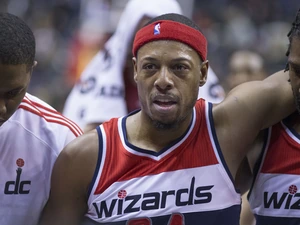
Paul Pierce Disputes $8,508 Child Support Complaint
Caption: Paul Pierce playing for the Washington Wizards, February 2015. Credit: Keith Allison / CC...
Emily Carter

A Judge Blocked Groundbreaking on Trump's 250-Foot Arch
President Donald Trump's proposed 250-foot memorial arch has won a key federal planning approval, but...
Erin Calloway

NASA Tracks a Giant Star Swallowing Its Smaller Neighbor
Astronomers have reconstructed a rare cosmic event in which a giant, aging star swallowed a...
Erin Calloway

IRS Raises 2027 401(k) Limit to $25,500, With Bigger Catch-Ups After 50
Workers will be able to put more money into many workplace retirement plans next year....
Alex Mercer

Health Savings Limit Rises to $9,000. Medicare Can End Your Contributions
Americans with qualifying health insurance will be able to contribute up to $9,000 to a...
Laura Bennett