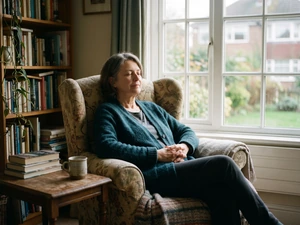
How Caregivers Are Managing Burnout Without Stepping Away
Susan Blake
Updated Jun 29, 2026
What the Numbers Say
Family caregiving in the United States is widespread, demanding, and far
more likely to result in burnout than most public discussions
acknowledge. A national survey commissioned by LogicMark in April 2026
among 1,000 U.S. adults found that 90 percent of family caregivers
report symptoms associated with burnout. Of those, 20 percent describe
their burnout as severe.
A separate analysis from A Place for Mom, drawing on a 2025 survey of
family caregivers published in early 2026, found that more than
three-quarters of caregivers experience feelings of burnout on a weekly
or daily basis - not as an occasional difficult stretch but as a
sustained, recurring condition. The same survey found that 64 percent of
family caregivers hold a full-time or part-time job in addition to their
caregiving role. For those caregivers, the demands of caring for a loved
one do not replace the demands of work. They are added on top of them.
What Burnout Actually Looks Like
The A Place for Mom research described burnout not as a single emotional
experience but as an overlapping cluster of strains. Caregivers who
report burnout also commonly report disrupted sleep, elevated emotional
stress, reduced social connection, and financial pressure. These are not
separate problems that happen to coexist - they reinforce each other. A
caregiver who is sleeping poorly is less emotionally resilient. One who
has reduced social contact has fewer outlets for the stress that
accumulates.
Stress and anxiety are the most prevalent forms of caregiver strain,
reported by 87 percent of caregivers at some point and experienced at
least weekly by more than half. Feelings of overwhelm are reported by 84
percent of caregivers, with nearly half experiencing them regularly.
These are not outlier experiences. They are the statistical norm for
family caregivers in the United States in 2026.
The Part the Data Also Shows
One of the more nuanced findings in the A Place for Mom survey is that
burnout and functional adaptation frequently coexist rather than exclude
each other. Despite high levels of stress, many caregivers in the data
simultaneously reported confidence in managing their responsibilities
and stable or improved family relationships. The research framed this as
a central tension in caregiving - strain and adaptation appearing
together in the same person at the same time, rather than one resolving
the other.
This framing is important because it runs counter to the typical
narrative around burnout, which tends to present it as a threshold - a
point at which functioning collapses. The data from caregivers suggests
a different pattern: sustained high-level functioning under conditions
of ongoing strain, with burnout present as a persistent background
experience rather than a sudden break.
What Helps Without Requiring Stepping Away
Healthcare professionals who work with family caregivers tend to
emphasize small-scale, in-place interventions rather than extended
respite - partly because extended breaks are not available to most
caregivers, and partly because the research supports the effectiveness
of micro-recoveries over time. Scheduled short breaks - even 15 to 20
minutes built into the day consistently - are associated with reduced
stress markers in caregiver populations. Delegating specific tasks to
other family members, even minor ones, can reduce the psychological
weight of feeling solely responsible.
Physical activity, even brief and low-intensity, remains one of the most
consistently supported stress-reduction tools for caregivers in the
literature. Short walks, brief stretching sequences, or any activity
that creates a temporary physical boundary between caregiving tasks has
documented value beyond the physical benefits.
The LogicMark survey noted that aging in place - the preference of most
older adults to remain in their own homes - depends heavily on family
caregiver support. As that population grows, so does the scale and
intensity of the caregiving burden carried by adult children and
spouses. The strain documented in the 2026 surveys is not a marginal
phenomenon. It is a widely shared experience that most of those living
with it manage quietly.
For many caregivers, the most useful reframing may not come from
external support but from recognition - understanding that the burnout
they are experiencing is documented, common, and not a reflection of
inadequate effort, but of a genuinely demanding situation being
navigated without enough help.
References: New Survey: Caregiver Burnout Soars as Millions Care for Aging Loved Ones | 2026 Caregiver Burnout Statistics: How Stress Shows Up in Family Caregiving

AI-Assisted Content
The News And Beyond team was assisted by generative AI technology in creating this content.
Trending
How Drug Prices Are Sending Mixed Signals in 2026
The prescription drug cost story in 2026 is not a single headline. It is two...
Thomas Hale

These Cash Back Cards are Turning Heads
Sponsored

Where Summer Cooling Costs Are Climbing Most
No Region Is Escaping This Summer While the national average for summer electricity costs is...
Daniel Reeves

These 10 Money Moves Could Save Seniors Hundreds
Sponsored

How Americans Are Adjusting Grocery Budgets in 2026
Budgeting Is Up, and Groceries Are Where It Shows A YouGov survey conducted in February...
Laura Bennett

Why More Americans Are Working Past Retirement Age
The New Math of Retirement Timing Retirement has been drifting later for years. But data...
Daniel Reeves

The Hidden Drain on Your Bank Account
Sponsored

Why Some Private Colleges Are Now Facing Closure Risk
Colleges and universities have weathered enrollment fluctuations, budget pressures, and demographic shifts before. What higher...
Erin Calloway
Why Older Workers Are Staying in the Job Market Longer
For generations of American workers, retirement was a threshold - a defined moment when steady...
Thomas Hale

Why Irregular Sleep Schedules Carry More Risk Than Short Sleep
The Part of Sleep Advice That Gets Left Out Most guidance about sleep focuses on...
Emily Carter

The Bank Text That Looks Real but Is Not
A Phone Call That Sounds Like Your Bank The phone rings and caller ID displays...
Ryan Ellis

The Walking Habit Physical Therapists Recommend Most
Why Walking Matters More Than Other Exercise Physical therapists and gerontologists consistently recommend the same...
Susan Blake
What the Medicare Part D Drug Cap Means at the Pharmacy
Two Changes That Took Effect in January Two significant changes to Medicare prescription drug coverage...
Erin Calloway

Social Security's 2032 Warning Could Mean Smaller Checks
A Deadline That Just Got Closer The Social Security Administration released its 2026 annual Trustees<br...
Thomas Hale

Federal Funding Fight Is Testing Higher Ed's Stability
American universities have operated with federal research grants, international student enrollment, and general political stability...
Erin Calloway
What This Year's Hiring Slowdown Means for White-Collar Work
The unemployment rate held at 4.3 percent in April. By that measure, the labor market...
Thomas Hale

Why More Adults Are Paying Attention to Balance Training
A Risk That Grows Quietly Among adults 65 and older, falls are the leading cause...
Emily Carter
Summer Electricity Bills Are Set for a Record High
A Summer Cost That Keeps Climbing American households are on track to pay more to...
Laura Bennett