Two-Factor Authentication Just Got a Major Upgrade (And Your Password Manager Might Support It)
By Ryan Ellis. Apr 15, 2026
Your financial institution or email provider just started offering a new login option: biometric verification or a passkey instead of a password plus text message. This isn’t a coincidence. It’s part of a broader shift happening across the technology industry.
Two-factor authentication once meant combining something you knew-a password-with something you received, such as a text message code. That system remains more secure than passwords alone, but security experts increasingly believe it is no longer sufficient against modern fraud tactics.
Why SMS Authentication Is Losing Favor
Research surrounding passwordless authentication suggests that passkeys and biometric login systems moved firmly into the mainstream during 2025.
Part of the shift is regulatory. Financial institutions and technology companies are facing growing pressure to reduce reliance on SMS-based authentication because text-message verification codes can still be intercepted, socially engineered, or compromised through SIM-swap attacks.
Several international banking regulators have already begun requiring institutions to phase out text-based one-time passwords in favor of stronger authentication systems tied directly to trusted devices.
The underlying concern is straightforward: the weakest point in many modern login systems is no longer the password itself, but the recovery and verification process surrounding it.
How Passkey Authentication Works
Passwordless multi-factor authentication combines something you possess-such as a phone, laptop, or security key-with something unique to you, like a fingerprint, facial scan, or device PIN.
Instead of transmitting a password across the internet, the device verifies your identity locally and then confirms successful authentication to the service.
In practical terms, that means your login credentials are harder to steal through phishing pages, interception attacks, or large-scale data breaches.
The most common implementation today is the passkey: a cryptographic credential securely stored on a device you already own.
Major Platforms Are Already Making the Shift
Most major consumer ecosystems already support passkey authentication.
Apple’s iCloud Keychain, Google’s Password Manager, and Microsoft’s authentication systems now allow users to store and synchronize passkeys across multiple devices. Financial institutions, email providers, and social media platforms are increasingly rolling out support as well.
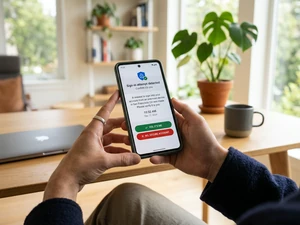
For many users, the transition has already started quietly through new “Sign in with passkey” options appearing inside account settings and login screens.
The Goal Is Better Security With Less Friction
One reason passkeys are gaining traction is that they improve both security and convenience at the same time.
Users no longer need to wait for text-message codes or remember increasingly complex passwords. Authentication becomes faster while also reducing exposure to phishing attacks and credential theft.
The transition will not happen overnight. Most services continue offering traditional passwords and text-based verification alongside newer authentication methods during the migration period.
Passwordless Authentication Is Becoming the Default
The long-term direction, however, is becoming clearer.
Security teams increasingly view passwordless authentication as the future standard for protecting consumer accounts, especially for banking, email, and other high-value services.
For users, the shift does not require immediate action. But enabling passkeys or biometric authentication on important accounts can provide stronger protection as more organizations move away from older SMS-based verification systems.
The transition may take years to fully complete, but much of the infrastructure is already in place. For many users, the next phase of internet security has already quietly begun.
References: Passwordless Authentication In 2025 The Year Passkeys Went Mainstream

The News And Beyond team was assisted by generative AI technology in creating this content
Trending